Laboratory uniform development
Laboratory operators, education suppliers and distributors need a clearly specified coat program with controlled fit, lengths and identification.
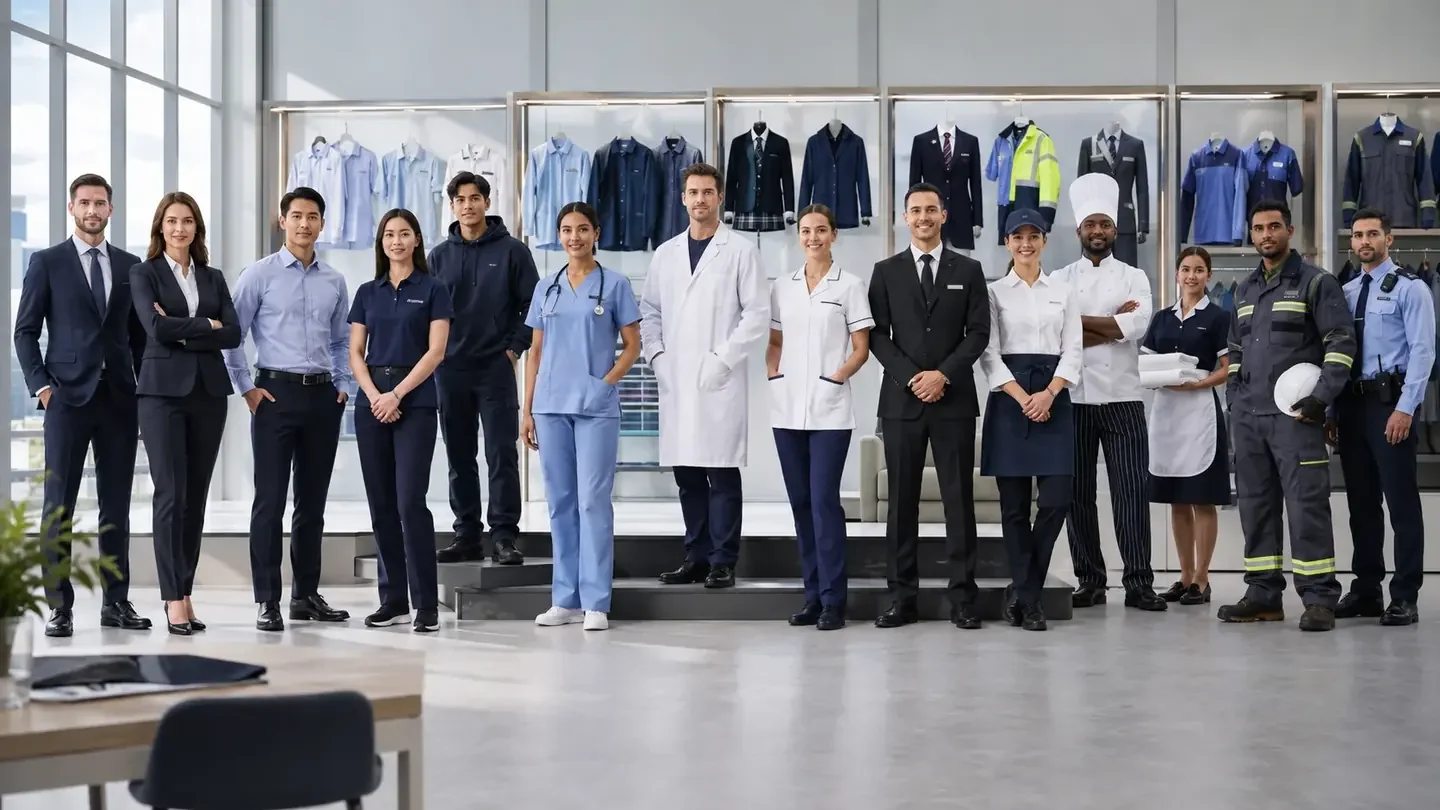
Start with roles and real tasks.
Lab coats and coordinated work trousers can support general uniform requirements. Required protective garments need a separate verified specification.
Recommended fabric direction: Polyester–cotton woven fabrics are common development options; material selection must follow the intended environment and required tests.
What your brief should resolve.
Define ordinary uniform versus protective use
Name embroidery, department identification, pocket layouts and coat-length variants.
Review cuff and front closure preferences
Document intended use first, establish any testing requirements, approve materials and a fitted sample, then confirm size allocation and labels.
Check coat length and reach
Polyester–cotton woven fabrics are common development options; material selection must follow the intended environment and required tests.
A coordinated program.
Name embroidery, department identification, pocket layouts and coat-length variants.
From roles to approval.
Document intended use first, establish any testing requirements, approve materials and a fitted sample, then confirm size allocation and labels.
- Minimum order
- 100 pieces per style, per color, with a mix of 4 sizes
- Sample development
- 7–12 days for simple styles; 15–20 days for complex styles
- Bulk production
- Calculated according to style and order quantity
Related products
Lab Coats
Custom laboratory coats with controlled lengths, practical storage and an identifiable team appearance.
Explore product ↗Clinic Uniforms
A coordinated front-of-house and practitioner wardrobe for multi-role clinical teams.
Explore product ↗Work Pants
Utility trousers with storage and reinforcement positioned around the job.
Explore product ↗Have a Uniform or Adaptive Apparel Project?
Send us your reference images, tech pack, measurements or product concept. Our team can evaluate materials, construction and sampling options.